Tag Archives: Inflammatory Bowel Disease

We Don’t Know We Don’t Know

Do you have a “quotation that inspires you”? The one I would choose is probably not an obvious one for a health blog. You might have been expecting me to have trawled through the “inspirational” websites to find some relevant, life affirming words. I hope you’re not disappointed….

Here goes. Over to that well known, now deceased, US philosopher, Donald Rumsfeld. It’s the quote he was ridiculed for at the time, unfairly in my opinion, as it makes perfect sense. In case you don’t remember what he said :
“…as we know, there are known knowns; there are things we know we know. We also know there are known unknowns; that is to say we know there are some things we do not know. But there are also unknown unknowns- the ones we don’t know we don’t know.”


Bear with me, I hope it will become clear. To illustrate the point I’m using a subject I feel particularly strongly about – bile acid malabsorption (BAM). As someone actively engaged in research into bowel issues, I’ve read many comments from patients who have recently been diagnosed with BAM and many times they go on to say that their doctor had never heard of the condition before. That’s the first hurdle to overcome.


If you have been diagnosed with BAM you’ll know that it causes chronic diarrhoea. Bile acid is usually recirculated to the gallbladder via the far end of the small intestine. If that area is damaged or compromised the bile acid passes directly into the colon triggering the secretion of extra water, leading to looser stools. It can be a very debilitating condition.


I am a fellow sufferer as a result of losing my terminal ileum. (I had an ileostomy back in October 2010. Full story in my book! Before the operation I was offered the chance to take part in an Enhanced Recovery Scheme at one of the top London hospitals. Part of the ethos behind this regime is to fully inform the patient of what will happen at all stages of the process – pre-op, during the hospital stay and beyond. Was I told about BAM before the operation? I’d have to answer “maybe” and this brings us to the point of this post. Let me explain….


I was expecting my digestive system to function normally after the surgery. The Enhanced Recovery Nurse and the surgeon had told me that absorption of vitamins and salts would be much reduced as I would no longer have a terminal ileum. If someone told you that your body wouldn’t absorb salts properly what would you take that to mean? I took it at face value, I would need to up my intake of salt (sodium chloride) to compensate and take supplemental vitamins. I didn’t see the need to question the statement as it seemed very clear. Maybe I should have been more curious as I left hospital with a long term prescription for 12 Imodium capsules per day.


In fact it took four years before I underwent a SeHCAT scan and was diagnosed with severe BAM. It was then that I discovered it has an alternative name “Bile SALT Malabsorption”. Suddenly the comment about not absorbing “salt” took on another meaning. You can see the problem.


This is where Donald Rumsfeld comes in. I heard what the Enhanced Recovery Nurse and the surgeon told me; I understood what the words meant to me; but didn’t appreciate what the words meant to them. From their point of view – they were using their everyday, medical terms to describe a likely problem to a patient.


From this experience I have learnt to always question what I am being told and to do my best to get the doctor, consultant or surgeon to explain, in simple or non-medical terms, exactly what they mean and what they perceive the implications to be.


I keep coming back to those particular words in the quote “there are things we don’t know we don’t know.” Try repeating them to yourself as you enter the consulting room…..

Using my limited AI skills I asked ChatGPT to draw this image. I posted it on various FB forums and many of the responses were saddening as so many patients had suffered from this debilitating condition for years, undiagnosed, and it had badly affected their QOL.

In 2025, as part of the “Wrestling The Octopus – The IBD Patient Podcast”, we interviewed one of the UK’s leading experts on bile acid malabsorption, Prof. Julian Walters. If you want to know more about the condition this give this episode a listen.

The “BAM Episode” has been far and away the most downloaded of any. I would be interested to know how many of these were by healthcare professionals seeking to learn about this condition.

BAM Episode of WTO Podcast

A Bigger Pill To Swallow

If you’re about to have your first video capsule endoscopy (VCE) or simply wondering what the experience is like then read on. I underwent my third procedure in September 2023, each one has been slightly different.

Fantastic Voyage – revisited

In November 2018 I had my first VCE and afterwards published a blog post “Fantastic Voyage” as it reminded me of that sci-fi film about a submarine crew who are shrunk to microscopic size and venture into a body to repair a damaged organ. What follows updates that post and then goes on to describe the two further procedures.

Why did I need a VCE in the first place?

I was feeling fit, well and with a good QOL. Colonoscopies, endoscopies & biopsies were all clear but… test results were suggesting the opposite – calprotectin approaching 2000 (normal range 50 to 100); Hb hovering around 110 (not particularly low but on the way down); and I was losing weight (down by 15kg). The only part of my digestive tract that hadn’t been seen through a lens was the small bowel between duodenum and my anastomosis, where my large and small intestines had been rejoined after an ileostomy in 2010.

With a capsule there is always a risk of it becoming stuck so as a precaution a radiologist was asked to review my last MRI scan for strictures before the VCE was ordered. The alternative is to swallow a patency capsule which is a dissolvable pill that surrounds a small radio frequency identification (RFID) tag that can be identified by an X-ray or CT scan. If the pill become lodged in the gut it simply dissolves. The latest cost (2025) that I could find for an NHS capsule endoscopy procedure is £747.

The pre-procedure instructions were similar to having a colonoscopy but with none of the dreaded prep solution. The leaflet listed the medications that would have to be put on hold. These included iron tablets and loperamide 7 days out. Iron tablets – no problem, but loperamide – that was one instruction I didn’t follow. The thought of taking a trip to London without having taken it for 7 days was not even worth considering.

On arrival at the GSTT Endoscopy Department a specialist nurse outlined the procedure and ran through the risks. In the worst case scenario the capsule could become stuck and need surgery to recover it!

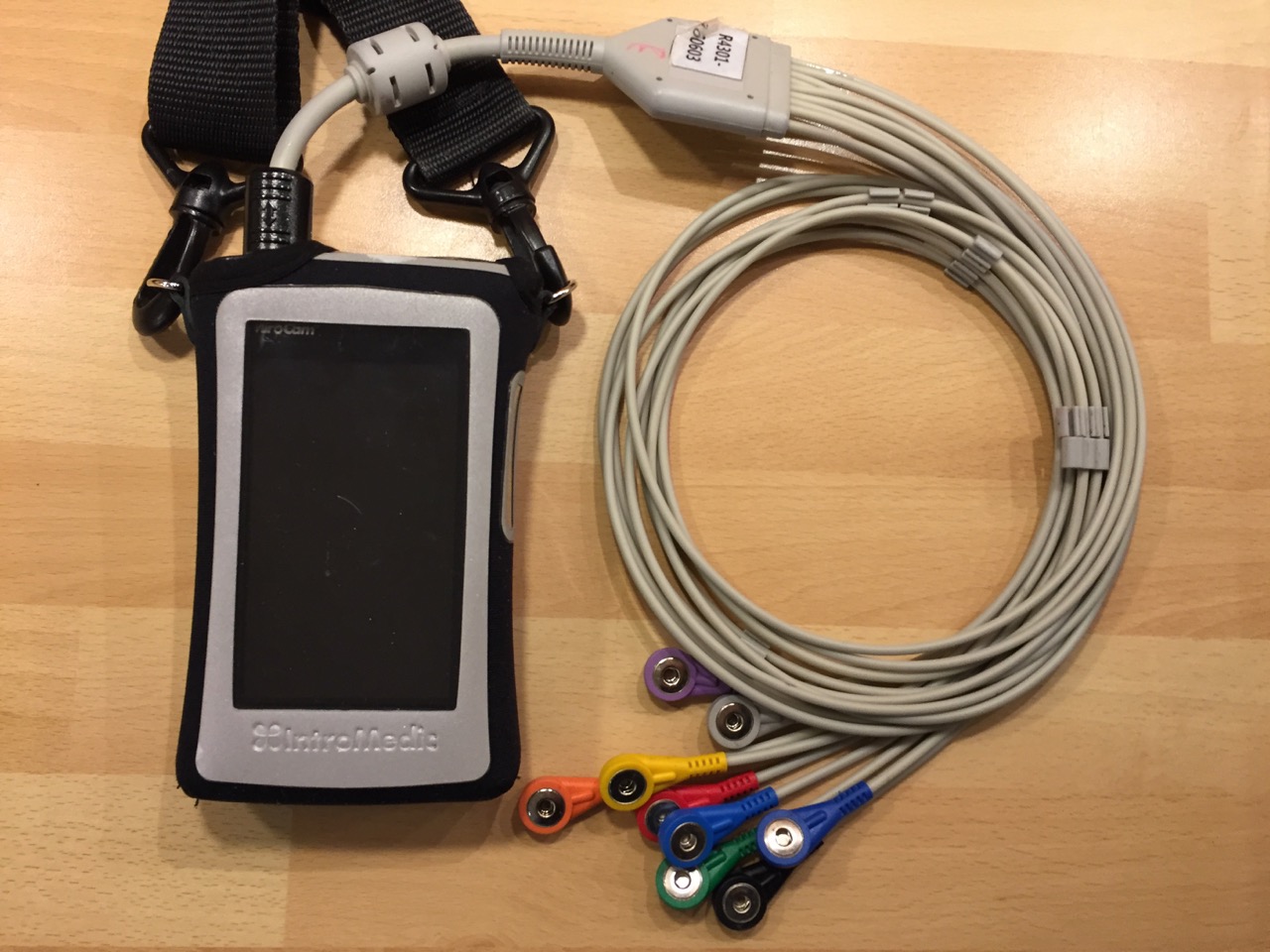
Several different camera systems are on the market, all working on similar principles. There are also different types of capsule for specific tasks. The more advanced ones have higher resolutions & frame rates and some communicate with the recorder unit wirelessly, without the need for sensors. In this instance the MiroCam system was being used with its array of sensors picking up the capsule signal and sending it to the recorder.

The first task was to attach the numbered sensors in the correct positions around the abdomen and connect them to the wiring harness, very similar to an ECG. The harness itself was quite bulky. The nurse then produced the capsule, asked me to hold it between my fingers then pass it in front of the recorder unit. A bleep showed that they had paired. My information had already been entered into the recorder unit with the display showing name, hospital number etc.

VCE sensors on a wired unit

How easy was it swallowing the capsule?

The answer, for me, was very easy. One gulp of water and it was on its way. The nurse switched on the live monitoring function and we watched it enter my stomach. To save battery power she then switched it off and I didn’t have the courage to try switching it on again in case I ruined the whole procedure (…and what if I had seen something that, to my eyes, looked wrong? A surefire way of inducing hypochondria).

Wired receiver unit

The unit had a 12 hour battery life and switched itself off automatically after that time had elapsed. I could then remove the sensors and return the recorder unit. The results were due in two weeks time.

When would I be able to eat and drink again? Coffee two hours after swallowing the camera, a light meal after another two hours and then resume normal eating after six hours. You’ll be pleased to know that the camera is not retrieved after the procedure (although there are some types that do rely on the patient “collecting” it and returning it to the hospital for analysis!).

Wearing the receiver unit took me back to having a stoma as it was hanging in the same position as the bag and the adhesive on the sensors gave a similar sensation to that of a stoma backplate.


When the report was available it showed that Crohn’s had re-surfaced in my small bowel in the form of mild to moderate inflammation. This was a disappointment as I had been in drug free remission since 2011. A printed copy of the endoscopy report, in glorious living colour, arrived in the post. I was intrigued by the transit times : 15 minutes to make it through the stomach; 2 hours 52 minutes travelling through the small bowel; and 8 hours 51 minutes in the colon. These were classed as being “within average range”.

Luckily there was a summary report; unluckily there it was in black and white “…with a background of Crohn’s these are in keeping with mild to moderate active disease”. As a result I was started on Vedolizumab.

Video Capsule No.2

In August 2020 I received a call from Endoscopy appointments to arrange for a follow-up VCE to see if the inflammation in my small intestine was still there. I would need the obligatory small bowel MRI first to ensure there were no strictures that could trap the capsule on its journey.

We were in the depth of COVID restrictions and the procedure was considered to be an AGP (Aerosol Generating Procedure) and as a consequence I needed to have a negative COVID result 3 days prior to the hospital visit. It was arranged for a courier to deliver a test kit, wait for me to carry out the test and then return it to GSTT for analysis. It turned out negative.

The endoscopist had been working at GSTT for 15 years but, surprisingly, our paths had never crossed. He explained that the hospital had access to 7 different camera systems and that their prominence as a leading teaching hospital meant that manufacturers were keen to make their systems available. The one they would be using that day was made in Wuhan (yes, THAT Wuhan) and was the first one to include a type of AI which highlighted frames needing particular attention when reviewing. Two representatives from the manufacturer sat in on the procedure to observe it being carried out.

Unlike my previous VCE this capsule transmitted directly to a receiver worn on a belt without the need for sensors. It was a lot more convenient. The output from the camera was displayed on the receiver and also on a laptop.

I asked if it would be possible to examine my oesophageal varices to see if they needed banding. I was hoping to avoid a conventional endoscopy later in the year. Yes, it would be possible by adopting an “oesophageal protocol”, a fancy way of saying you lie down as the camera is swallowed so that the passage through to the stomach is slowed down. Swallowing it whilst lying down was not as difficult as it sounded but even so it only took a few seconds before it entered my stomach.

I lay on a pivoted bed. It was tilted head first, feet first, then left and right so the camera could video all around the walls of my stomach. A patch of inflammation appeared. It would be discussed at the next MDM on Friday. Eventually the camera was allowed to pass into the duodenum and it was time to get back on my feet.

I returned to St.Thomas’ the following day to drop the recorder belt back. Eventually the follow-up letter arrived from the VCE Virtual Clinic. It was good news, very good news. The vedolizumab was doing its job.

Video Capsule No.3

The same again but different : In March 2023 I ended up in our local A&E with internal bleeding. An upper GI endoscopy showed oesophageal varices had regrown despite being OK when checked a few weeks previously. What had caused them to reappear?

A small bowel MRI scan picked up a new clot in my superior mesenteric vein and I went to see a thrombosis consultant. Our discussion boiled down to should I start on blood thinners, something I had declined in the past. Before making the decision he wanted to make sure that I was not bleeding in locations other than my oesophagus hence requesting a VCE.

When the nurse rang to arrange the date for the procedure she said that she would be including sachets of MoviPrep. I remarked that a) I hadn’t had to take prep on the previous occasions and b) if I had to then I would prefer Citrafleet. The instructions arrived together with the Citrafleet.

The preparation was now virtually the same as having a conventional colonoscopy with the same restrictions on the type of medications and the timing of meals during the countdown to procedure day.
(Having had the conversation about not having prep I recalled that when I had been through our medicine cupboard I had found a sachet of MoviPrep and assumed it had been sent for some colonoscopy in the dim and distant past. Maybe I hadn’t used it prior to a previous VCE.)

This time the capsule was the two lens version which results in it being larger than the previous ones I had swallowed. That didn’t present a problem but then I have become used to swallowing pills and capsules. Out of curiosity I asked the nurse how they would administer it if someone couldn’t swallow and she replied that it is possible to introduce the capsule with an endoscope!

The set-up was slightly different from before. There was a disposable belt with built-in sensors, fastened with velcro around the waist. A cable connected it to the recorder unit hung over one shoulder. Apart from that the operation was as previously described and at exactly 12 hours from the start the receiver bleeped and switched itself off. I returned the recorder to GSTT the following day.

I mentioned to the nurse that I had a follow-up appointment with the thrombosis consultant in two weeks time. She said that it should be possible to have, at least, a preliminary run through by then but you have to remember there are nearly 100,000 frames produced.

…and then I had a short wait until talking to the thrombosis consultant and deciding if I should start taking blood thinners. By the time of the tele appointment with him the VCE report was available. We covered a lot ground, probably too much to take in to be honest. My case had been discussed at the Thrombosis Radiology MDM and the decision was to not start anti-coagulation. I was quite happy not to be taking even more medication!

Now or Later?

Are you a “Now” or “Later” person? When you’ve undergone some test or maybe an MRI scan do you prefer to get the result/report as soon as it is available or do you prefer to wait until you see your consultant?

I’m definitely the former. I like to know what could lie ahead so that I can come to terms with the worst scenario and then, if reality is actually not as bad, result!

When it’s something like a calprotectin test then it’s simple to compare the new value to previous ones and identify the trend. (I dropped a sample into the Path Lab for analysis just before Christmas and should be able to get the result soon).

The problem comes when you read a report that is well beyond one’s own limited medical knowledge or experience. I had such a report arrive in the post last week. The MRI scan itself was carried out at the end of last July but if you’ve read my previous couple of posts you’ll see that there was an apparent conflict between it and a subsequent colonoscopy. I had asked my consultant to send me through the text and he duly obliged.

Before we go any further here it is :

“MRI Small bowel study :

Comparison is made with the previous MR in April 2012. Previous ileocolic resection again noted.

There is stricturing seen in the proximal and distal sigmoid colon as before, with relative sparing ol the midsigmoid colon. As before there are adhesions between the rectosigmoid, proximal sigmoid and the dome of the bladder which is tented upwards and slightly thickened, suggestive of developing colocolonic and colovesical fistula formation. No intravesical gas is however seen at present. There is moderate prestenotic dilatation with the descending colon measuring 6.1 cm in diameter

As before a further stricture is seen in the proximal transverse colon measuring 10 cm in length, with slightly less mural thickening than before. Moderate prestenotic dilatation of 4.8 cm is seen. There is further stricture seen in the ascending colon over a length of 5 cm. Mild mural thickening and oedema is noted in the caecum and distal 5cm of the terminal ileum as previously.

The small bowel loops are suboptimally distended, with the impression of adhesions between the small bowel loops and anterior abdominal wall. No definite further strictures or active small bowel disease is seen. Mild splenomegaly is demonstrated at 15 cm as before There is a mild atrophy of the pancreas. Gallstones noted within a slightly thickened gallbladder as previously. Solid organs otherwise unremarkable.

No intra-abdominal collections. Small trace of fluid within the pelvis.

Conclusion: Appearances are similar to previously with stricturing seen within the colon, associated prestenotic dilatation, and evidence of penetrating disease as before.”

I mentioned this to another IBD patient to which they replied :

“This is exactly the reason why I don’t like getting copies of blood results or test reports as it always throws up questions that would not otherwise be there (particularly if you are feeling well). And it creates a feeling of unwelcome uncertainty when there is not a medical person to explain it….”

I can understand this reasoning and, having read the above I’m starting to think that maybe that’s the way forward.

There are four words in particular make me wonder what lies ahead – “stricture”, “fistula”, “adhesions” and “penetrating”. I’ve experienced them all before and it ended up with surgery. If I need further episodes under the knife then it’s not really a surprise. My consultant quotes the average time between surgeries for Crohn’s patients as 10 years. I’ve reached six and a half from the ileostomy, but before then (perforated bowel) it was 30 years.

Surgeon’s drawing of surgery – October 2010

Next time I see my consultant it should be an interesting conversation. How much of the report could have been expected given my past history? Are there any pointers to the progression/reawakening of Crohn’s disease? What next? Does it point to surgery sooner rather than later?

Once I have my latest calprotectin results back then I must get a date for that next appointment……

Until next time


Next steps

This is the follow-up post to “Where do we go from here?” posted on 3rd December 2016. (…and my record for future reference….)

Gastro Appointment – Guy’s Hospital 12th December 2016

As the date for the appointment drew closer my stress level increased. Not from the potential medical implications (though some might doubt this!) but the pure logistics of getting to London by 10:20am. It shouldn’t be a problem until you realise we have to rely on Southern Rail actually running a train. As it turned out my train was exactly on time but afterwards there were no more heading to London for 2 hours.

Having arrived at Guy’s Hospital with five minutes to spare I was greeted by a nurse who explained that the clinic was running 45 minutes late. I asked her to put a note on my file that I wanted to see my usual consultant (the top man). The wait increased to just over an hour when I heard my consultant calling my name. TIme to see if there were some answers. I produced my list of questions/comments.

We started out by discussing the outcome of the MDM. Had they been able to reconcile the apparent contradiction between the colonoscopy results and the MRI scan? No, they were at a loss to explain the differences.

The MRI report noted a 100mm stricture in the transverse colon and another in the ascending colon. Neither had been apparent from the scoping. The scan also showed adhesions, one of which was between  intestine and bladder. This could potentially lead to a fistula developing between the two. The tell tale sign would be gas when passing urine. That was a new one on me and certainly not something I had experienced so far.

The word that worried me was “fistula” but he pointed out that it was a possibility not a certainty.

The options left were to repeat the colonoscopy, or the MRI scan, but a barium enema, which is a test designed to look at the colon, would be preferable. (Not sure for whom. I still remember the last one over 30 years ago.) Rather than going straight to another procedure he suggested that we carry out a calprotectin test and if the result was the same or higher than last time (512) then it would be time to start practicising the buttock clench, so vital for the enema.

He asked how I felt generally. My answer was “very well” apart from every 10 days or so getting an upset stomach for half a day then back to normal. There was also an incident when I seemed to be leaking fresh blood but it only lasted a day and I concluded it was purely mechanical, maybe a burst blood vessel. He agreed with my conclusion.

I explained that I was keen to remain drug free having been taking no Crohn’s medication since 2010 (post-ileostomy). Was that an option with mild inflammation? Yes. The aim would be to start treatment early enough, to avoid surgery, should the inflammation worsen. (The knife is always a threat though). In line with my aim of not taking any new drugs I hadn’t been to see my GP about starting Questran for Bile Acid Malabsorption. I would remain on just Loperamide and adjust the dosage accordingly.

The one question I forgot to ask was “Does my reaction to Azathioprine (bone marrow suppression) suggest that some of other common drugs may be unsuitable?” That will have to wait for the next appointment.

I would be having my annual upper GI endoscopy at St.Thomas’ the following week and was wondering if we should also be monitoring my liver for stiffening (PSC). He said I should ask the endoscopist as it was their specialist area. The visit would also give me a chance to drop off the calprotectin sample to the path lab. I would then need to email my consultant in mid-January to get the results. Fingers crossed for <512. Clench.

At the end of the appointment I mentioned that I had eliminated a major element of stress by no longer commuting to London and have virtually retired. As I now had time in my hands I would be keen to do something for the IBD Community.

What is so nice about these appointments is that you never feel rushed. Every question gets a considered answer and all decisions are made jointly. Excellent.

After the appointment it was off to have lunch with a fellow IBD sufferer and then on to meet up with an old colleague for a coffee before attempting to get a train home.

Life Changing

Monday 11th October 2010 – OPERATION DAY

The operation time slipped from the 11:30am originally planned but eventually I was collected from the 12th floor and arrived down in the anaesthesia room at 12:30pm. The theatre team were ready for me and started the preparation procedures. They seemed to be a very happy crew, laughing and joking and that helped put me at my ease.

The anaesthetist I had met earlier then appeared. He greeted me with a broad smile and said he was ready to fit the epidural. Once that was done he said I’m just going to give you a mild sedative to relax you. I just drifted off into oblivion. Never trust an anaesthetist.

That’s the last I remember until waking up at six o’clock in Recovery. It was freezing. I was feeling no pain as the epidural was doing its job well but I was freezing. Shivering. Violently shivering. The house doctor, that I had seen in my room that morning, came up to see how I was. His first word was “Sorry…” so I knew what was coming. He told me it was a four and a half hour operation and that because of what they found when they opened me up it was necessary to have a stoma in order to give my large intestine a chance to recover. He lifted the blankets so I could see what they had done. It didn’t really come as a shock as I always knew it was a possibility and was mentally prepared for it. I can imagine what it would have felt like if I hadn’t been forewarned.

By late afternoon my wife was starting to get concerned. It must be a lot worse for those sitting at home waiting for news than the patient who is comfortably numb. She hadn’t had any news on how the operation went so she rang the Ward. They told here that I hadn’t arrived yet but would call when they knew what was happening. Just gone six thirty a doctor rang to tell her that I was OK. It had been complex surgery and I was still in Recovery.

The Team in Recovery were concerned about my readings, especially the temperature. At one point I had a “bair hugger” put round me which is a hollow blanket into which hot air is blown. Now I know what a formula one tyre goes through on the grid. I was offered a warm drink just a couple of hours after the operation. No more “nil by mouth”. It wasn’t until I was finally wrapped up in a large, microwaveable blanket that my temperature began to return to normal and I could be taken up to the ward. By now it was around eight o’clock.

Another huge change over the past few years is being able to use a mobile phone in hospital. I suppose it was inevitable as people would use them whatever. I asked the nurse if I could get my phone so I could ring my wife. As I explained earlier, they had locked my valuables in the ward safe and the night shift didn’t know the combination. Very frustrating.

I was taken to Northumberland Ward on the 11th floor, where I spent the rest of my stay. I had been expecting to be put in Page Ward, as that was the ward specialising in colorectal surgery. Unfortunately there were no beds available so I was put into the sister ward next door where they specialised in upper GI conditions.

{I felt really good and so could have easily written up my blog if I’d have had my iPad. (I imagine this was a post op high induced by the drugs). I finally managed to get hold of it the following morning to write this post.)

The house doctor came to visit me again to see if there was anything I needed. I asked him if he could ring my wife and tell her I was safely up in the Ward. He had a number of other things to take care of first but eventually she got a call at eleven thirty……..

I said at the top of this post that it was a truly life changing experience. I’ll go into more detail in another post but because of it :

  1. Lost my terminal ileum and gained BAM (bile acid malabsorption)
  2. Got stoma’d
  3. Started my relationship with St.Thomas’ Hospital
  4. Became very laid back about all things medical
  5. …and started blogging

Post Op Note : I never fully understood exactly what the operation involved. Earlier this year I contacted one of the surgeons and using the operation notes and pathology report, he put together this sketch for me.

op-drawing-by-surgeon

Where do we go from here?

At the moment it makes a change to write a post not connected to the #HAWMC (Health Activist Month Writer’s Challenge) that I’ve just completed. Having said that, there is still a link because I have mentioned in a couple of those posts that I find blogging therapeutic. It helps me to be objective and get things straight in my mind.

This post is therefore primarily for my own benefit but any thoughts/comments/questions welcome.

Background

I’m off to see my gastro consultant at Guy’s Hospital in just over a weeks time (12th December). I’ve already started getting my list of questions ready but I want to make sure I capture all the relevant details. I’m expecting us to agree next steps given my recent test/procedure results.

Since my reversal operaion in June 2011 I’ve been taking no Crohn’s drugs at all and everything has pointed towards me being in clinical remission. I really don’t want to take any more medication than the current Omeprazole, Propranolol, Loperamide and iron tablets  that I am on for PVT (Portal Vein Thrombosis).

When I my consultant, almost a year ago I said “I feel fine. I can’t see why we shouldn’t stretch these appointments out to yearly intervals.”  I don’t know exactly how long it was before I started to regret it, probably about three months, as the bathroom dashes had returned. As ever, with IBD/Crohn’s, it’s not easy to pinpoint what has caused the change and now that I have the addition of Bile Acid Malabsorption to consider it makes it even more difficult.

I tend to discount stress as I like to think I manage it quite well. At that time I was commuting to London, or more precisely Canary Wharf, and the travelling was always unpredictable, mainly due to the truly appaling service provided by Southern Rail and the frequent RMT strikes. To be sure of getting a train meant getting up at five o’clock in the morning. Maybe stress did play its part this time. My wife has said I seem a lot more relaxed now that I’ve given up work. (I decided to semi-retire at the beginning of November but I’m open to offers for short term assignments.)

The upshot was that I emailed my consultant and explained the problem. He suggested a calprotectin test (stool sample) and we would decide what to do next depending upon the result. After three weeks (28th May) the test report came back showing a considerable jump upwards to just over 400, suggesting active inflammation.

A colonoscopy was arranged – 13th July – and the finding was “ongoing mild colonic crohn’s disease. No evidence of crohn’s recurrence in the neo-terminal ileum.” The previous scoping (February 2015) noted “mild, patchy erthema (redness) throughout the colon” but concluded “quiescent (inactive) crohn’s disease.”

Because a colonoscopy can only just reach into the small bowel an MRI scan was booked  to look at my small bowel. I didn’t have to wait long – 29th July with a follow-up appointment on 5th September to discuss the results. Suprisingly, the MRI showed a stricture in my colon even though the scope didn’t. Very strange. This conundrum would be put to the Gastro Dept’s next MDM (Multi Disciplinary Meeting).

The MRI scan also showed adhesions, which are usual after surgery, but I would like to know a bit more about locations. I’ve been getting an ache around ny anastomosis for a number of years but it seems to be worse in the last week or so. This may be down to lifting a couple of “heavier than they looked” objects. Yes, I know it was stupid but male arrogance etc…..

I’m intrigued to know how the MDM reconciled the apparently contradictory colonoscopy and MRI scan results? I would have thought the camera results would take precedence. I also need to understand if the adhesions, on the scan, are just confined to my rejoin (terminal ileum). We’ll talk about their conclusions on 12th December.

We also discussed the large jump in calprotectin level and he asked me to repeat the test to check whether this was a rogue result. Unfortunately the result, when it came back, was even higher.

Looking at the calpro graph it’s apparent that somewhere between November 2015 and May 2016 the inflammation restarted.

calproI mustn’t forget to mention that a few weeks back I was having a “do I call an ambulance” moment when I started loosing some blood from where the sun don’t shine (no, not Manchester). I concluded that due to the fact it was bright red it must be very fresh and the result of surface injury and did not warrant 999. By the next day I was fine again.

Over the last few weeks my digestive system seems to be back on an even keel so is it possible/advisable to continue without medication even though mild inflammation is present? Is any damage done by not taking medication for such a long time? Does the calpro trend suggest that the inflammation is getting worse? I have noticed that I can sometimes feel the action of peristalsis across my middle which I’m assuming is matter passing along the transverse colon. Maybe this ties in with the mild inflammation.

I will mention that I have not talked to my GP about Bile Acid Malabsorption as my digestive system seems to have returned to normal with just the odd blip every 10 days or so. Is this return to normality as a result of no longer commuting to London?

I’m booked in for an upper GI endoscopy on 21st December to monitor the growth of varices in my esophagus.  I’m wondering if we should be doing any further monitoring of my liver to look for worsening of the cirrhosis. Add it to the list.

I just need to turn the above into a succinct list  and I’m ready for the appointment. I just hope the newly announved ASLEF ovetime ban doesn’t stop the trains from running.

It should be an interesting session on 12th.


A little further down the road?

5th September 2016 – Gastro Appointment – Guy’s Hospital – 10:20am

…the story so far can be found in the post “Crying Wolf”

Today’s appointment was to get the results of the MRI scan I had five weeks, or so, ago and then work out the way forward to get my health back on track.

It was the first appointment following my retirement so no chance to just leave the office for an hour to attend. It would need a special trip and chance to suffer the reduced timetable operated by Southern Rail. Having left home in plenty of time I arrived at Guy’s only two minutes before the due time. Almost immediately my name was called for me to be weighted. I had lost around 6 kilos since my last appointment. I asked the nurse to put a note on my records that I wanted to see my usual doctor. “No problem”.

Being weighed allows you into the inner sanctum, the inner waiting area, from where you are collected by your consultant. A student approached me and asked if I would be prepared to take part in some genetics based IBD research. I’m always more than happy to help so he left me a document to read and would talk to me after I had seen the consultant.

The waiting area was remarkably quiet. It’s been jam packed on previous visits and I’ve waited over an hour to be called. I’ve been preparing to give a talk on “Living with IBD” as part of a lecture for undergraduate nurses on chronic conditions. I had intended to do it completely off the cuff but I have come to the conclusion that is unrealistic. I’ve written out what I want to stay and the software has then converted it to speech so that I can listen to it on my iPod. This seemed like a good time to give it another listen.

I was miles away, submerged in the narrative about weight loss and fatigue in IBD, and then realised my name was being called. It was my consultant. I apologised for appearing to be on another planet and we made our way into the consulting room. By now it was 10:50am.

I had my obligatory list of questions with me :

  1. Results of colonoscopy 13th July 2016 – “ongoing mild colonic Crohn’s Disease. Previous colonoscopy” – 25th February 2015 – “mild, patchy erythema throughout the colon, however no ulceration seen”. Has there been a change? Does it need to be treated?
  1. Results of MRI scan?
  1. BAM – could this be causing weight loss etc. Treatment – Questran (low tolerance) Colesevelam.
  1. Blood test organised for 2 weeks. Have asked for cholesterol to be checked

Starting with the 1) it did suggest that the Crohn’s has returned albeit mildly. I mentioned that my last calprotectin level had been elevated – around 425. He called up all my results and drew a graph which showed that the last result did not follow the trend. “Collect a sample pot on your way out and we’ll re-run the test in case that was a rogue value. Let me know when you drop the sample in so that I can keep an eye out for the result.”

I asked about potential drugs to treat the inflammation. (Usually I would have been kept on a maintenance dose of Azathioprine but the onset of thrombocytopenia back in 2008 had made this a non-starter). He explained that there were drugs that specifically targetted the colon that were used to treat ulcerative colitis. He mentioned a form of Budesonide. I have subsequently looked this up and found a NICE document about Budesonide multi-matrix (MMX/Cortiment). It is formulated to release at a controlled rate throughout the colon to minimise systemic absorption. The licensed dose is 9 mg in the morning, for up to 8 weeks. It was licensed in October 2014 for inducing remission in mild to moderate active ulcerative colitis in adults for whom aminosalicylate treatment is not sufficient.

2) What did the MRI scan show? Strictures in my colon but they hadn’t shown up on the colonoscopy. Usually a colonoscopy trumps an MRI scan so this was an unexpected result. He proposed to take the results of both to the next MDM (multi-disciplinary meeting) to try and come up with an explanation.

It also showed adhesions but the fact they existed was not news. Since shortly after my reversal I had been complaining of an ache around the anastomosis .

3) Given the very variable nature of my digestive system and my recent weight loss I wondered if it was finally time to bite the bullet and start taking a sequestrant to treat my severe bile acid malabsorption. I had been fighting shy of taking yet more drugs and have been controlling it Loperamide.

I asked if it would be possible to prescribe Colesevelam (the tablet form) rather than Questran (powders) as I had read many reports of the former being easier to tolerate. I was aware of the cost differential, a factor of 10. He said that for the good of the health service budget I should try the Questran first but this would be a discussion for me and my GP.

4) I mentioned that I had a blood test organised for a couple of weeks time and would send the results through to him. I had asked for a cholestrol check to be carried out.

He would organise my next appointment once the MDM had discussed my results. He then took me back to the student doing the genetic study and I spent 10 minutes answering questions and spitting (saliva into a sample tube).

Where did that get me?

I’ve learnt about the possibility of a new drug to treat the inflammation in my colon and I’ve set in motion potentially directly treating the BAM. I think I’ll leave the decision on that one until my next appointment when we have an answer on colonoscopy/MRI scan conflict.

…and in the meantime an old client has called me up to see if I would be free to do some work for them. Retirement will have lasted precisely 5 weeks…