During the period from 1979 and 2007 there were some long stretches when the Crohn’s could almost be forgotten, interrupted only by short episodes of flare-ups. I kept no diary during this time so I’ve used my patient notes and outpatient letters to reconstruct the course of the disease over nearly 30 years.
(I have included details of the varying medication dosages as this is information that may be of specific interest to other IBD sufferers. Nowadays the long term prescription for steroids is frowned upon).
August 1979 to December 1992
By mid-August I had recuperated sufficiently to resume work and returned to the construction site in King’s Cross. I went on to spend a further three years there and was one of the final members of the team to leave.
With the warm summer my scar would often be visible under my tee shirt. I wore it like a “badge of honour”. Whilst the appendectomy incision was very neat and hidden from view, the laparotomy was a brute. If anyone asked what had happened I would tell them I got caught in “the wrong place at the wrong time”. I don’t know if anyone believed me.
When I saw my consultant that month he noted that: “this patient seems to be settling down…..I recommend he continues with his 15mg prednisolone daily, until we see him in two months”. I was starting to gain weight which may, in part, have been due to the steroids. In October it was decided that I should try to reduce down to 10mg and then by a further 5mg.
I managed to get to ten but as soon as I went lower the symptoms of a flare-up would start to appear, at which point I increased the dosage until they passed. In September 1980 I was again at 15mg in an attempt to ward off a flare. I saw my consultant who wrote: “…. (he) then increased the dose of prednisolone with some benefit and has kept on the same dose since. He is being married in a month’s time and I suggested he remains on the 15mg till he has settled down and then tries reducing …”
The month passed quickly and at the end of October I married my girlfriend who, despite the Crohn’s, was prepared to take me on. By now she had left uncertain employment in the film industry to take up a “steady” job. She was making her way upwards through the Civil Service and with our two reasonable salaries we had taken the first step on the property ladder by getting a mortgage and buying a flat.
Interest rates at that time were 16% which meant it was a struggle but just about manageable. Endowment mortgages were the usual recommendation and required the taking out of a separate life insurance policy. When we came to arrange this cover I had to declare that I was suffering from Crohn’s disease and had undergone surgery. That’s when we discovered that some insurance companies considered I was a risk too far. With some ringing around we managed to find one who did want our business but imposed a 10% weighting on the premiums.
By the time I next saw my consultant in January 1981 I had reduced the steroids to just 5mg and was continuing to put on weight. Outpatient appointments at Mayday Hospital, under Dr. Parrish and then Dr. Theodossi, became routine and stretched out to six monthly intervals. Whilst the target was eventually to reduce the steroids down to nothing I was still having to vary the dose to keep everything on an even keel. It quickly became apparent that around 10mg was my optimum level. My consultant agreed I should remain at that dosage.
Outpatient appointments now became annual events. By 1982 we had moved from a flat to a house and started some major refurbishment work. There was a new addition to the family. No, not a child as we had already decided neither of us wanted children. It was our first pony, who we kept close-by in a rented field.
In 1987 my wife was getting bored with her job. We must have felt sufficiently confident in my health to drop to one salary and allow her to return to college. She trained to become a saddler and harness maker and in 1988 set up her own business.
I also changed jobs and started working locally. As a result I went to a different pharmacy to collect my prescriptions. Tablets were dispensed loose, in little brown bottles. There were no advisory leaflets listing endless side effects but their system was a lot more up-to-date than the previous pharmacy. They had a label printer that automatically included important warnings. The label on the codeine phosphate stated: “do not drive or operate machinery, if affected, whilst taking this drug“. I had never been warned of the potential side effects before or that it was an opioid.
Having ordered a new company car (we may not have got tablets in bubble packs back then but we did get company cars) I decided that I didn’t want to put down on my insurance form that I was taking an opioid so I just stopped taking the codeine. It seemed to make no difference at all.
I worked two years for that company but their property division was starting to hit hard times as land values were falling rapidly and this was affecting all their operations. The writing was on the wall and I decided it was time to jump rather than be pushed. I landed a role on the Channel Tunnel project at Folkestone seconded to the client, Eurotunnel, monitoring progress. It was an opportunity not to miss, working on the largest construction project in Europe, if not the world.
The downside was driving to Folkestone every day, a round trip of 130 miles. Stress is acknowledged as having a bad effect on Crohn’s sufferers so the prospect of a long drive to work and then the same coming home had to be given careful consideration. We decided to see how I got on and then, if necessary, I would find a room to rent near the site if the travelling became too much. I ended up making that journey for four years and only moved on when my role on the project came to an end.
Even with all the driving and the pressure of a job with an “immoveable” deadline, the Crohn’s was largely kept under control. The gap between outpatient appointments remained yearly.
At job interviews I always mentioned that I had Crohn’s but played down the potential seriousness. As far as I was concerned I was coping fine and having very little time off work. During that whole period from my operation through to working on the Tunnel I cannot recall meeting anyone who had ever heard of Crohn’s. It wasn’t until I worked at Folkestone that I met a fellow sufferer.
She was keen to get me to join NACC – The National Association for Colitis and Crohn’s Disease (now renamed CCUK). I simply didn’t want to know. I have seen this attitude described elsewhere as “being in denial“. I wouldn’t say that I was in denial that I had Crohn’s but, as far as I was concerned, it had very little effect on my life and it would stay that way. I suppose you could say that I was denying that it could get a lot worse. As I saw it, why would I want to meet up with a group of sick people? Why would I want my rosy picture of what lay ahead challenged? I even joked that I would get a tee shirt printed up with the slogan “It’s the Crohn’s that keeps me going!“
Information on the disease, and possible outcomes, was not widely available then, especially if you didn’t join NACC. Nowadays, with universal access to the internet, you could argue that there is too much information and that it is biased towards the bleaker side of the “Crohn’s Experience”.
December 1992 to May 1999
At my December check-up I had been on 7.5mg of prednisolone for a long period but was complaining of abdominal pain after eating. It was decided that I should have an OGD – oesophagogastroduodenoscopy – let’s call it an upper GI endoscopy or gastroscopy. In layman’s terms “a camera down the throat”. It took place at the beginning of January 1993 and showed mild oesophagitis, inflammation of the lining of the oesophagus. I remember that trip to Mayday Hospital as I woke up in Recovery and discovered that our next door neighbour was lying in the adjacent bay. It transpired that she was also suffering from Crohn’s. She was only the second person I had met with it. I now have a copy of the endoscopy report but not the covering letter.
The next entry in my medical notes was a follow-up letter from February 1994 and the first one typed into a computer. I had managed to get down to 5mg and was showing no signs of flaring. Review again in 12 months’ time. This pattern continued until December 1997 when I was again complaining of abdominal pain. The follow-up letter stated: “The patient himself feels that there is an area of inflammation and he may well be right. I plan to evaluate him further with a colonoscopy and barium follow through“. Something to look forward to over Christmas.
Late January I had the colonoscopy and, to no-one’s surprise, it showed that that I still had the ulcerated stricture in my terminal ileum. Unfortunately they don’t just disappear. I discussed the implications with the consultant and he mentioned a method of widening the gut by inserting a balloon attachment on the end of a scope and then inflating it. The medical term was “balloon dilation”.
The steroids were immediately increased to 50mg and a new 5-ASA drug, Pentasa (or mesalazine), introduced as a locally acting, bowel specific, anti-inflammatory. The initial hit with a high dose of steroids, and maybe the Pentasa, did the trick again and I started to feel a lot better.
The last paragraph of the letter following the colonoscopy read: “Although he has a stricture in the terminal ileum, I do not think he needs a balloon dilation as yet, as he is asymptomatic“.
I slowly reduced the steroids over a number of months and by the following outpatient appointment, in September 1998, I had (apparently) unilaterally stopped taking the Pentasa. I was told to start again. For the first time my consultant discussed moving my medication to azathioprine but I would need daily blood tests to start off with. By now I was working on the Millennium site in Greenwich in preparation for the erection of the Dome and the end of century celebrations. It was a similar role to the one on the Channel Tunnel and another project with an immoveable deadline. Daily blood tests were simply a non-starter.
The doctor wrote: “We discussed decreasing steroids and starting azathioprine but he says that this is not an option because he would be unable to get blood tests done on a frequent basis“.
I’ve mentioned stress before. The new job was particularly tough as the site manager was a bully. I wasn’t singled out, the whole site team suffered equally. We should have taken our employer to an employment tribunal but we were all earning good money for the inconvenience of working in Greenwich, so we put up with it. Driving to site each day was also very stressful as it was impossible to avoid traffic congestion somewhere along the route, you just didn’t know exactly where it would be on any particular day. Despite this I stabilised again for six months just taking the steroids and Pentasa.
The internet was starting to take off and the ability to research the side effects of various drugs made much easier. At that point I had been on steroids for almost twenty years and whilst I was never aware of any outward signs of side effects, no uncontrollable weight gain or moon face, I was now alerted to the problems other patients had suffered. When I next saw my consultant in January 1999 he wrote “He is extremely keen to reduce the prednisolone as he has been reading about it on the internet“. It was a decision we agreed to defer for a further six months due to work commitments.
I made it through to the beginning of May and then the pain became a lot worse. I had been booked in for another barium follow-through but was feeling bad enough to arrange to see my consultant sooner. Once again the chosen course of action was to hit the Crohn’s with an even larger dose of steroids, this time starting at 60mg, the highest I had ever been prescribed. He told me to take a week away from work with the aim of getting back to a stable state. I do not know how quickly I improved but don’t remember spending any further time off.
Eventually the day of the procedure arrived. I can vividly recall the test at Mayday Hospital as if it was yesterday. The first problem was swallowing the barium meal – a thick, off-putting, tasteless sludge. Having downed the final mouthful, trying not to gag, there was then the wait whilst it slowly made its way around my digestive system. I was called into the X-ray room and given an initial scan but the barium had not made sufficient progress and I returned to the waiting room for a little longer.
When I was taken back into the X-ray area I was asked to lay face up on the table. The radiographer took another scan but was still not happy with the result. He was having difficulty in getting the barium meal to move beyond the stricture. He produced a rubber beachball which he placed so that it acted as a cushion between the X-ray head and my abdomen. He then proceeded to bounce the head up and down and it slowly did the trick. The X-rays showed that the terminal ileum stricture was as bad as ever. The inside of the bowel was down to the size of my little finger. Sadly the films taken at the time are no longer available.
Shortly afterwards I went to see my consultant and was given the choice of starting azathioprine (Imuran) or having surgery. This drug was a “last resort” before the knife. It was 20 years since my last stay in hospital and I really didn’t fancy another one. There were other factors as well. We had taken the decision to move house again and started to look for one that better suited our lifestyle – dogs and horses. A major operation and the associated recovery period would have put a stop to all these plans, so I chose the drug route. I started on 50mg each morning followed by 100mg in the evening whilst continuing to take the steroids.
The consultant’s letter reads: “The barium follow-through on this man has shown a long stricture of the terminal ileum consistent with Crohn’s disease. I have explained to him that one option here would be to have surgery to resect the diseased bowel. The patient is not at all keen on that approach and has opted to take azathioprine……..I am therefore asking our haematologist to keep an eye on his blood count“. More of that in a while.
June 1999 to October 2007
In mid-June I was reporting that my abdominal pain was easing and that I had managed to reduce the prednisolone to 40mg. Then four weeks later I was down to 15mg but complaining about attacks of back pain. The consultant was concerned enough for me to have my back X-rayed but it showed nothing untoward.
At this point my memory becomes a little hazy. When I first started taking azathioprine I remember suffering joint pains in my fingers and knees. Every morning it would take around 10 minutes before they would work properly and I could manage a shower. After a while these symptoms disappeared and we put this down to getting used to the drug. Once again my health started improving.
Whilst I was writing this chapter I discussed it with my wife and she pointed out that one weekend I was feeling so unwell (very bad flu-like symptoms) that it was touch and go if we called an ambulance. In the end I spoke to the then equivalent of NHS Direct who put my mind at rest. I also recall that I had to take a couple of weeks off work as my body got used to this new drug invasion.
I went and saw my GP about the joint pains and he prescribed Vioxx, a non-steroidal anti-inflammatory drug used to treat arthritis. It was only after I had taken a couple of doses that I decided to read the information leaflet that was inside the carton. In the possible side effects section there was the following statement in a black box and bold white type – “MAY CAUSE DEATH”. That was enough for me and I never took it again. (If you look it up on the internet you will find that it was subsequently withdrawn. One article claims it killed 60,000 patients in America – maybe I had a lucky escape).
After these initial teething troubles I got on well with azathioprine. Having moved on from the Millennium Dome in mid-1999 I found I was able to cope easily with an even more demanding role as part of a small team successfully bidding for a ten billion pound project. It meant working long hours in London and surviving the daily commute by train into Victoria.
With the start of the new century approaching and my health apparently on an even keel we started, in earnest, to search for a property with its own land. We eventually found one that fitted the bill and moved in at the beginning of June 2000. This was a major change to our lifestyle as maintaining the property took up a lot of time and effort.
Once we had settled in to our new home I went and saw the local GP to introduce myself and arrange for my outpatient care to be transferred from Mayday to the much more convenient East Surrey Hospital in Redhill, about a ten minute drive in the car. I had already agreed with my original consultant that this would make sense so the transfer was just a formality.
My first outpatient appointment under the new hospital was at the end of January 2001. The consultant went through my medical history and I was given a brief examination for which the conclusion was: “His abdomen was soft, non-tender and I could see no evidence of fistulating disease on perianal examination. As his disease currently seems to be in remission, I have asked him to reduce his prednisolone by 1mg a week”.
I didn’t see him again until December 2002. The follow-up letter stated: “Since we last saw him, almost two years ago, he has remained well. He has had no symptoms from his Crohn’s disease. Have made no change to his medication. In view of his prolonged steroid treatment in the past I have booked him a DEXA scan and will see him again in 12 months.” The scan, to check for osteoporosis, was duly booked and showed a thinning of the skeleton around my hip joints, but nothing too serious.
Another year passed and at my December 2003 appointment, the consultant said that we were now getting into the slightly tricky area of when and if we should reduce the azathioprine dose as I had been taking it for at least four years.
When I reached the fifth year we were entering “uncharted territory from now on” as none of his patients had been on it that long. It had kept my Crohn’s under control and I proved able to cope easily with more demanding jobs. There was a period in early 2005 when I started getting back pain again but a short return to steroids cleared it up.
Summer arrived early in 2005. By mid-June temperatures were soaring and on the hottest day of the year I had been helping my wife with one of her tradestands. As the day wore on I felt worse and worse. There was no relief from the heat. Breathing was becoming difficult. I was starting to think I was having a heart attack! I knew that before we could even start the hour long drive home it would take at least two hours to dismantle the tradestand and pack all the stock away. Somehow we made it.
At that point my wife noticed that I had developed a strange rash just on one side of my body. We recognised it as shingles. I went and saw my GP who signed me off work for two weeks. I’m not aware of any connection between IBD and shingles apart from them both being linked with stress. Maybe I was just unlucky to go down with it. Many years later I would relive the feeling of having a heart attack but in very different circumstances.
In late September it appeared that my Crohn’s had started to play up again as I was getting abdominal pain but now accompanied by a repeat of the lower back pain. My GP thought it was purely mechanical, not Crohn’s related, and told me to take paracetamol. If it didn’t improve we would review it again.
I saw him two weeks later and by now the pain had considerably worsened. I described it as feeling like a restriction in my lower abdomen. I was also getting dull aching in my sides and feeling nauseous on occasions. Had the azathioprine stopped working and surgery become unavoidable?
He was obviously concerned and thought I should discuss these issues with my gastroenterology consultant. He ordered a blood test and the results came back showing that my inflammatory markers were high and my haemoglobin dropping.
Each gastroenterologist I had been under said that if I ran into any difficulties they would see me at short notice. All I needed to do was telephone their secretary and the necessary arrangements would be made. This was such an occasion.
I was starting to feel sufficiently poorly to have my outpatient’s appointment brought forward. After our meeting he wrote: “I saw this gentleman earlier than expected as for the last three weeks he has had increased diarrohea with back pain, lethargy and difficulty in sleeping. I note that a recent blood test does show a slight increase in his inflammatory markers. I suspect this is the Crohn’s but he is reluctant to go back on to steroids which would be the next treatment. I have therefore done some stool cultures and asked him to increase his Pentasa to 1g/day. If he does not settle then I can see no alternative but to put him on a reducing course of prednisolone….”
I was visiting the GP surgery on a regular basis and having fortnightly blood tests as my health deteriorated further. Co-codamol was prescribed to deal with the pain but eventually I could not put off the steroids any longer. I started at 40mg and then tapered down each week.
By the time the next outpatient appointment came round I had reached 15mg and my consultant suggested that I maintain this level until after Christmas so that I kept well over the holiday period. He also increased my azathioprine dose as, despite everything, I had steadily gained weight, up to 83kg which warranted the higher dose.
Three months passed and it was time for another hospital appointment. I saw a registrar who was concerned that I was still taking prednisolone, although only 7mg, and I got a slap on the wrist for not taking the correct dosage of Pentasa. I explained that it was a case of forgetting to take my lunchtime dose. He went off to discuss my case with the consultant and returned saying that he had arranged for a barium follow-through. He asked my GP to prescribe 9mg of budesonide and stop the prednisolone. If my symptoms improved over the next four weeks it could be reduced by a third.
I didn’t have long to wait for the follow-through X-ray, just two weeks. I was starting to get used to these unpleasant procedures so was not unduly concerned in the run up to it. It showed no abnormality in the oesophagus, stomach or duodenum but after an hour and a half the barium finally reached my terminal ileum. The stricture now measured approximately 15cm and there was ulceration typical of Crohn’s. The bowel is supposed to float freely inside the body cavity but some “tethering” of adjacent small bowel loops showed up on the lower right side of my abdomen. As the original 1988 scan was no longer available it was not possible for a comparison to be made.
Over the next few months I started to feel better on a steady dose of 6mg of Budesonide. My consultant suggested going down to 3mg and then stopping altogether. I was still making excuses for not taking my lunchtime Pentasa.
Another six months passed and the decline started again. I went and saw my GP in November 2006. The notes from that appointment included: “… due to be flying to States on Sunday so warned he may not be fit to fly and to try to make alternative provisions with work”. I don’t recall exactly where in the USA I was due to travel to, probably Houston for a meeting, but I ended up cancelling the trip.
A week later I saw my consultant. He looked at my blood test results and concluded that this was not my Crohn’s getting worse. He didn’t want me continuing with the Budesonide but asked me to up the Pentasa to three tablets a day. I was wondering whether some external issue could have caused the flare as, for the first time, I had decided to try an energy drink to give myself a little more “go”. I had drunk a couple of cans of Red Bull with its high caffeine content. Could that have caused my problem? I’d never had any issues with coffee.
Now, before I get sued by Red Bull, let me make it clear that I have no proof that their product was the trigger for my flare-up but I do know that some Crohn’s sufferers have reported an intolerance to caffeine. Maybe I was just clutching at straws. Quite a common thing to do when you are trying to explain why your symptoms have returned and you don’t want to face the possibility that it is the inflammation rearing its ugly head again for no reason.
By January 2007, when I next saw my consultant, I was back to equilibrium. My CRP reading (C-reactive protein, a measure of inflammation) was below one and the only area for concern was a slightly raised ALT level (liver enzyme). It was decided that we would monitor it but in the meantime the azathioprine was increased further (to 200mg) and the Pentasa reduced.
I hope that for the non-Crohn’s reader this chapter has demonstrated the ups and downs when one suffers from IBD, and to be honest I have escaped lightly compared to many. It does put a brake on some longer-term plans but has not greatly interfered with my career or hobbies, meanwhile…….
Having said that details of my private life would be kept to a minimum I should, at least, give a passing mention to my job in the years immediately before the life changing event in 2010 and the hobby that consumed the bulk of our time, funds, adrenalin and nervous energy.
In 2002, with my health seemingly stable, I was getting itchy feet (no, not some new side effect of Crohn’s) and started looking around for another job. After a few interviews I had two companies interested. The deciding factor, in the end, was that one of them, the UK division of a large US corporation, worked a nine day fortnight. Having moved into a property that needed a lot of maintenance the advantage of an extra day off every two weeks was irresistible.
As a principal manager I was expected to go and visit my team dispersed around the UK, Europe and further afield. I also stood in for my immediate boss who suffered from UC (Ulcerative Colitis) and went through some very rough times, far worse than anything I had ever been put through. He spent many weeks off work and when I visited him at home I really did fear the worst.
With his extended absence, it came as no surprise when I was asked to go and see my director. I already knew what was coming and that he wished me to go to Algeria. He was even hinting that he wanted me to spend an extended period away. If that had been the case then I would have resigned but I was saved by my medical history. Prior to my trip I had to see the company’s doctor for the compulsory overseas medical. Whilst he was happy for me to spend a couple of weeks out there, he told the company that he would not sign me off for a long-term assignment. Subject closed – for good.
Of all the visits, the Algerian trip was the most stressful as we had to be driven everywhere, escorted by armed guards, and were not allowed to wander out of the office even for a few metres, although that never stopped me. There was one particular driver who the other guards seemed to avoid. I asked our security manager if I was imagining it and he replied: “no, it’s his history, he’s ex-police firing squad”. Glad I asked.
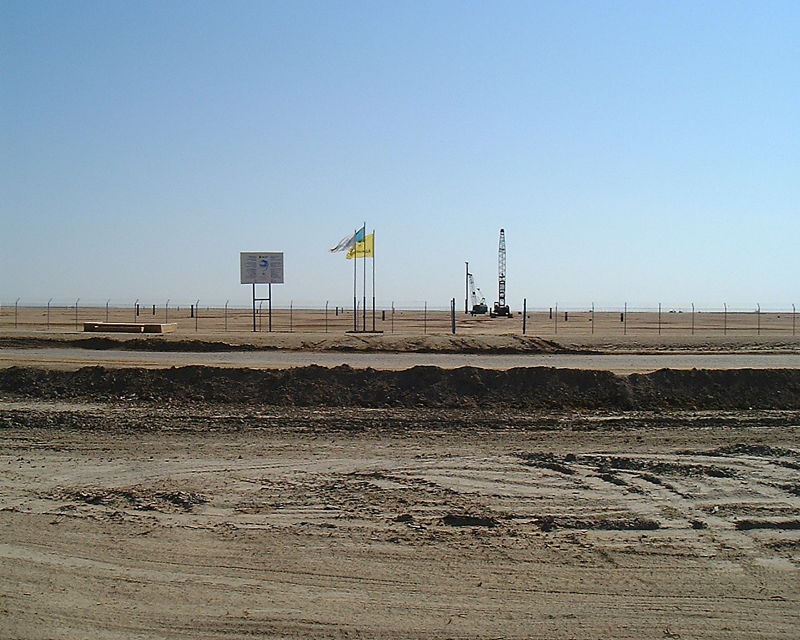
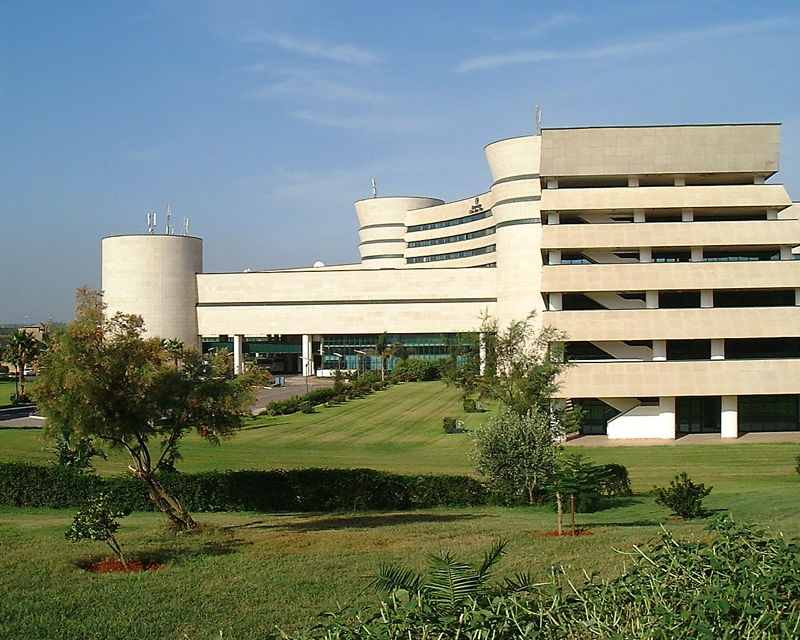
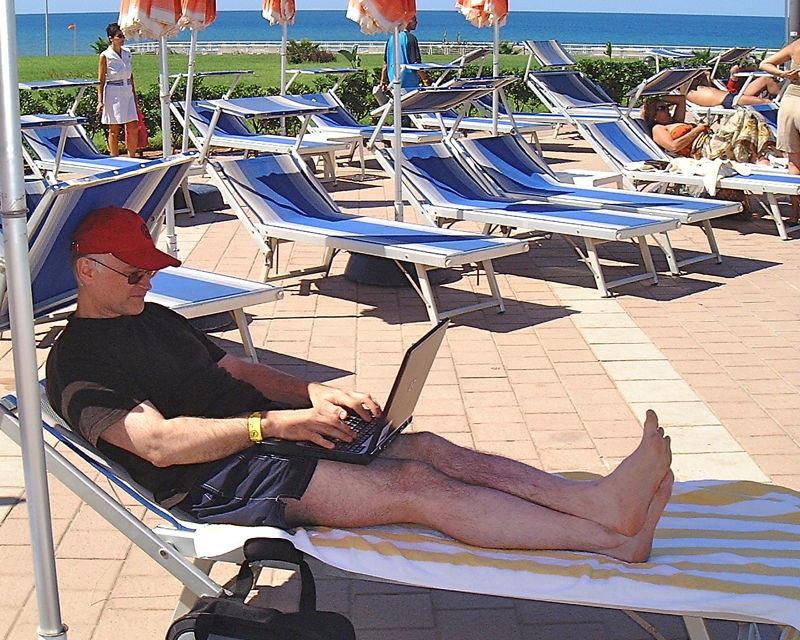
As someone who was not widely travelled the chance to visit some interesting locations, with everything, including MediVac, arranged for you, was a real bonus. Some other memorable visits involved Kazakhstan (2003), Belfast (2005) and, later, Dubai (2007). Each time my Crohn’s played up but nothing too serious. I was able to manage by making sure that I always knew where the nearest bathroom was. The opportunities for taking photographs were endless and I grabbed them with both hands. (Photos – oil field in Kashagan

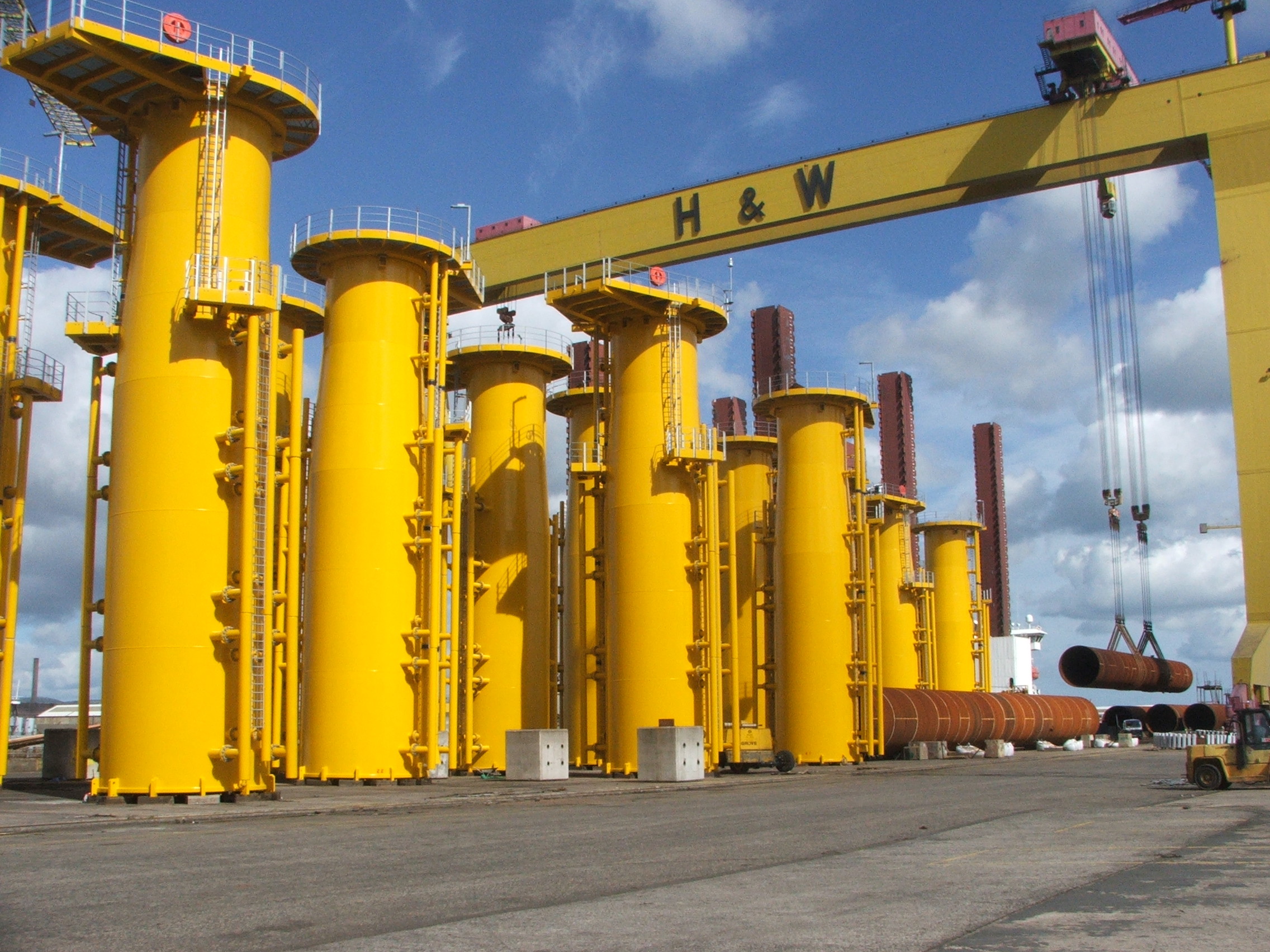


So far I haven’t explained where my field of expertise lies – the planning and risk management of large projects – anything from a multi-million pound offshore wind farm to a 30 year strategic programme of works worth billions. The range of projects has been so diverse that there has always been a new challenge around every corner.
The techniques I employed professionally have also proved useful for managing my health. I hope that this will become apparent as you read on.
A Change in Circumstances
For many years I had considered working for myself. On several occasions an old colleague had told me to try it as there was plenty of work around. At the back of my mind was the worry that the Crohn’s would come back with a vengeance so I had chosen to keep within the security of working for a large company although, on principle, I never joined any of the private medical schemes on offer.
Towards the end of 2007 all was going well again and we were in a strong enough financial position to cope with this major change to our lifestyle, regardless of what the future might hold. In November I became my own boss and started working for two large clients. It all started so well….
Away From Work
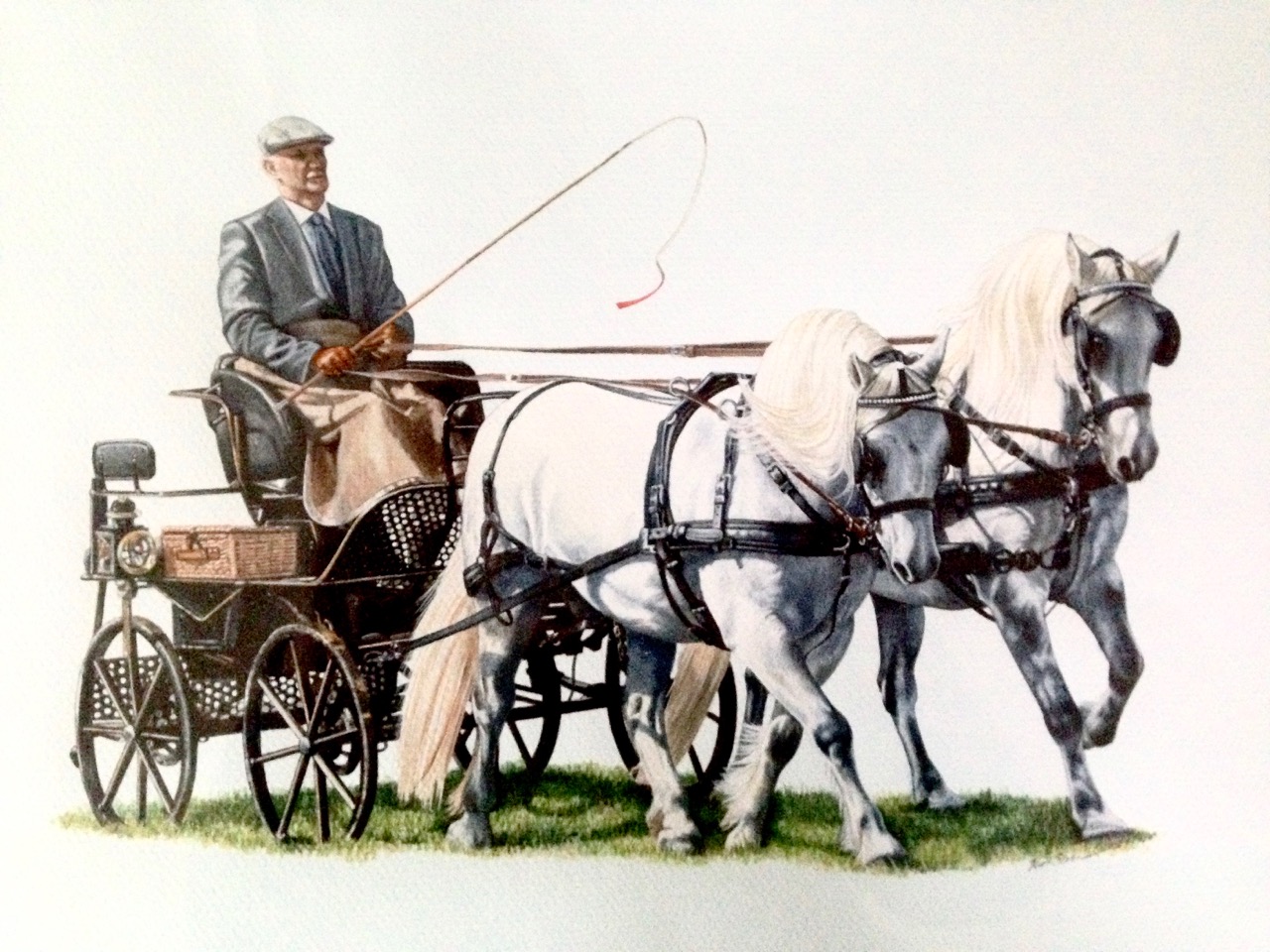
In 2002 we started competing at carriage driving. Yes, just like the Duke of Edinburgh but without the unlimited funds, resources and facilities. If I wanted a totally stress-free hobby then maybe gardening would have been a better choice. Travelling to shows certainly caused stress levels to rise. Every time we set off for an event I would wonder: “Will our old lorry break down? Will we get held up in traffic? Will there be plenty of space to park when we get there? Will the ponies behave? Will I remember to release the handbrake on the trailer this time?” We were never going to compete at the highest level but as long as the ponies were nicely turned out and behaved themselves then we were happy.
Our most successful year was 2007. Having been placed second in our class at the local Agricultural Show, on August Bank Holiday weekend, we made the trip to the Towerlands Centre (near Stansted Airport), the furthest we had ever ventured. We had qualified for a national competition and now it was time for the finals. We won our class!. A fitting end to our showing year and it turned out to be one of the last venues we competed at as, unfortunately, one of the ponies started to suffer with COPD. We had to curtail the number of events we attended after that.